
Protecting Your Brand on Amazon
Updated: Apr 21, 2020
Amazon's stock just hit another all-time high. It’s estimated that Amazon controls more than 38% of the ecommerce market in the United States and unless you’ve been hiding under a rock, you know Amazon also has a counterfeit problem. We continue to see more and more news about Amazon’s counterfeit issues, but most of the articles’ conclusions, seem to be that Amazon simply needs to do more to police third party sellers. While we agree that Amazon should do more, we think all platforms should be more transparent and accountable. And, while we have high hopes that regulation will someday incentivize ecommerce platforms to better self-monitor, we want to share how you can analyze and combat the Amazon counterfeits afflicting your brand. Understanding Amazon’s marketplace can be confusing to many but understanding its’ structure is paramount to protecting your brand.
Copyrighted image misuse
Amazon’s crisp images and informative product pages create an inviting, tidy, and user-friendly site. Prime members appreciate fast shipping. Amazon’s convenience is undeniable, but from a brand protection perspective Amazon’s creates multiple issues.
Amazon has stringent image requirements. Primary product images must be professional photographs with pure white backgrounds. Because creating a new listing with compliant images is difficult, many sellers forego creating their own listing images and simply upload manufacture stock images, frequently against copyright holder’s wishes.
Companies invest heavily in creating marketing material, including images that represent their products to customers. Authorized retailers benefit from company provided images and marketing material to represent those products appropriately. When customers see official company images or logos, they may believe they are purchasing through official channels. Most brand protection strategies include enforcement against unauthorized use of company owned images to remove suspicious sellers. Indeed, we’ve reported thousands of sellers for using official company images without permission. When they re-posted with their own images, it was apparent that the items were in fact counterfeits.
On most ecommerce websites all that you must capture to report an IPR violation is a link to the infringing listing. Amazon’s structure is different than most ecommerce sites. Unlike listings on other marketplaces, individual sellers may have little to do with the images or details included in the listing. This is because what Amazon calls a detail page is closer to catalog entry than a seller listing.
When a detail page is created, it becomes a permanent catalog page on Amazon.com that will remain even if the creator's inventory sells out. Additionally, when you add your copyrighted image to a detail page, you grant Amazon and its affiliates a non-exclusive, worldwide, royalty-free, perpetual, irrevocable right to exercise all rights of publicity over the material.
Other sellers can list their items for sale against pages that you have created or added your copyrighted images to…
Basically, once your copyrighted image has been added, Amazon retains that image and description for use by any other seller of the same item. If your wish to report unauthorized use of your images, you must report each individual image. The images will be removed, but the offers will remain. It may also be necessary to periodically re-review the listing because Amazon doesn’t seem to have any mechanism preventing other sellers from uploading the same image to the same catalog page.
Counterfeits piggyback on genuine product listings:
Because sellers aren’t required to supply their own details or images for previously cataloged products, counterfeiters can quickly create a seller account and piggyback on listings for popular products. Poor quality counterfeits often hide behind manufacture stock photos on tidy product pages.
As mentioned, Amazon considers a listing a permanent catalog page. In order to prevent multiple entries, the same product, Amazon requires sellers of identical products to list on the same page. Each product listed is catalogued under an Amazon ASIN. ASIN stands for Amazon Standard Identification Number. Each item (with a few exceptions) must include a GTIN (global trade identification number). GTINs include UPCs (Universal Product Code), EANs (European Article Number). These are the numbers found below the barcode on retail packaged items. Each GTIN is then mapped to the corresponding ASIN.
Barcode Picture
Amazon’s search functionality even allows you to search by UPC, or scan barcodes with their mobile app in order to locate items on Amazon


This organizational structure makes sense when one remembers Amazon’s origin as a bookstore selling both new and used books. Before Amazon allowed 3rd party sellers they would buy and sell millions of used books, many of which came in multiple versions and editions. In order to keep book sales organized, each book was catalogued according to its’ unique ISBN (International Standard Book Number). Amazon simply applied these same organization principles to other products.

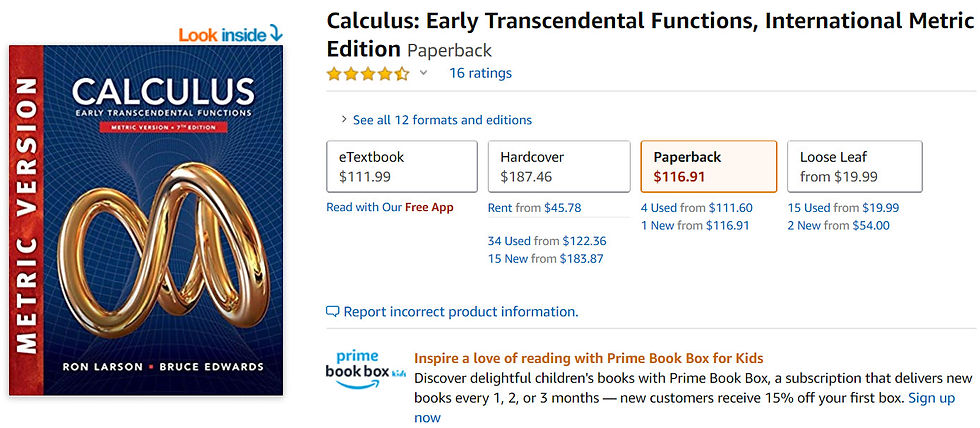
Reviewing product listings organically can be tedious if the product is offered in multiple sizes or colors. If multiple variations of an item exist, each variation has a unique ASIN, but those ASINs share the same product page or parent-ASIN. Amazon calls theses variations child-ASINs. Reviews for each variation are combined under the same product page. If multiple sellers are selling the same item at the same time, they each compete on the same page for Amazon’s buy box. When consumers switch between variations Amazon automatically switches between different third-party sellers and Amazon’s own items for sale. Roughly 80% of purchases buyers make are made from the buy box. Consumers regularly purchase items they believe to be for sale by Amazon which are actually sold by third parties.
Amazon’s algorithm for choosing the seller in the buy box heavily favors sellers with the lowest price. Counterfeiter’s items can be promoted ahead of authentic sellers with good track records simply because they offer lower prices.
Because a product page can be composed of hundreds of child-ASINs, it can be difficult to locate all sellers organically, or even figure out which option is the lowest price. In this shirt example, there are 39 colors in 12 sizes. So, there are 468 possible combinations. Only 269 variations from 32 different sellers are currently available on Amazon. A counterfeiter might only carry the most popular sizes and colors or sell limited edition colors knowing he'll have little competition.
Common clothing product page - note the variation in prices

Amazon variation example

Using software, one can quickly locate every child variation, and analyze every corresponding seller on a given product page. and match those ASINs with your own GTIN database. Once you know which ASINs are associated with your brand, it becomes very easy to scan for new seller offers, but to gather that information manually you’d have to select each color and to sift through each size. Once you have a complete picture, analyzing seller’s as a whole becomes far more effective than reviewing individual ASINs by themselves.
While Amazon has created a Brand Registry tool and Transparency program to assist brand owners, someone looking at our example parent ASIN in the brand registry would still need to manually select each child ASIN to find the corresponding seller. Even, if you identify a counterfeiter in the Registry, it doesn’t have any functionality to allow you to review all of their additional listings, nor does the brand registry allow you to exclude authorized sellers
from future review.

Amazon's brand registry still requires you to click on each ASIN to see which sellers have offers.
There is no way to prioritize ASINs with offers.
Amazon’s brand registry program has a few useful features but has severe usability limitations because of the inability to exclude previously reviewed sellers or irrelevant listings. In order to effectively police these pages, you need to locate all of the parent and child ASINs that correspond to your brand and be able to scrutinize new sellers without re-reviewing the same sellers each time.
Counterfeiters create duplicate detail pages and variations:
Once you’ve successfully removed counterfeiters from otherwise legitimate ASINs, you’d think you could simply police those ASINs for suspicious sellers. With a little cooperation, Amazon might even help by gating offers listed under your brand. Once a brand is gated, Amazon will require that sellers document authorization or prove authenticity before being allowed to sell under your brand’s listings on Amazon.
While Amazon clearly prohibits the creation of duplicate listings, they don’t police their own policy very well. Counterfeiters constantly game Amazon’s system by adding their fakes as if they were unique products and create new ASINs.
Counterfeit toys, remain a large concern on Amazon

Counterfeiters will use brand name abbreviations and use false or otherwise unallocated GTIN numbers to avoid having their listings gated. These listings are generally easy to locate and enforce, but suspended counterfeiters are persistent and will create new seller names and invent numerous fictitious brands to re-list their fakes. After being removed for infringing one trademark, sellers will change titles, hide trademarks in images, and use descriptive titles to make enforcement more difficult. Because these sellers avoid using brand names in their listing, an all-the-above enforcement approach that includes patent, and copyright enforcement may become necessary.
Another limitation of Amazon’s infringement reporting mechanism is that it only permits referencing one intellectual property right per complaint. We’ve seen many cases where Amazon agreed with the complaint, removed the ASIN from visibility, but allowed the seller to resurrect the ASIN by making incidental title or image changes. In these cases, diligent monitoring, persistent enforcements and experience navigating Amazon’s reporting system are the keys to persevering against fakes.
FBA and Commingled Inventory
While understanding Amazon’s ASIN and product page organization is part of the equation, understanding what happens behind the scenes is also important. When a seller posts an item for sale, they can choose to fulfill the item themselves or ship their products to an Amazon fulfillment center and pay Amazon to handle shipping. Amazon calls this service Fulfilled by Amazon or FBA.
Unless sellers add additional labels to their items to the items, Amazon treats items like commodities. According to Amazon:
Each product fulfilled by Amazon requires a barcode. We will always use the manufacturer’s barcode to track your inventory throughout the fulfillment process, unless you change your barcode setting.
If multiple sellers have inventory with the same manufacturer barcode, Amazon may fulfill orders using products with that barcode when those products are closest to the customer. This happens regardless of which seller actually receives a customer’s order. We use this process to facilitate faster delivery.
How the manufacturer barcode works
When you receive a customer order:
· We may fulfill that order using another seller’s unit of the same product if it’s closer to the customer
· You receive credit for the sale
· We instantly transfer a unit of the ordered product from your inventory to that of the other seller
When another seller receives an order for the same product:
· We may use a unit of your inventory to fulfill that seller’s order
· That seller receives credit for the sale
· We instantly transfer a unit of the ordered product from the seller’s inventory to yours
The practice of commingling inventory has caused many brands issues, as their own products have been replaced with counterfeits supplied by criminals. Brand owners have found themselves receiving Amazon returns for counterfeits when dissatisfied consumers return items to Amazon. Many consumers believe buying items shipped and sold by Amazon ensures they'll receive genuine items, but we’ve seen far too many cases where items that were shipped and sold by Amazon were commingled with counterfeit goods. Amazon has even been duped into sourcing from counterfeiters when manufactures refuse to sell directly to them.
Why does Amazon commingle inventory?
The simple answer is logistics. If they didn't commingle, it would significantly increase their shipping costs. Fast shipping is one of the key reasons for Amazon's success. While Amazon may be able to trace the origin of such products back to the source after the fact, we find this practice indefensible. Amazon has successfully blamed third parties for its counterfeit problems, but as long as they continue this practice, they should be held accountable, especially since they earn and retain a commission from the sale of each counterfeit, and rarely notify their customers that what they received was counterfeit. Guaranteeing two-day shipping should not be prioritized above guaranteeing authenticity and on a related note, guaranteeing product safety.
How can commingled inventory be prevented?
Assuming you’ve made the business decision to sell on Amazon, the simplest method would be to simply fulfill the orders yourself and/or require any authorized affiliates to do the same. Unfortunately, seller fulfilled items don’t always receive the same visibility on Amazon, and some buyers might exclude items not eligible for Prime shipping, Amazon’s algorithm also favors items that are shipped through their fulfillment centers when everything else is equal. The other option to avoid commingling would be to use FBA, but affix an “Amazon Barcode” also called a “FNSKU label” (Fulfillment Network Stock Keeping Unit) to every product sent to an Amazon fulfillment center and set your fulfillment settings to only use only your own inventory. While obviously there is an extra expense to adding an additional barcode to each item, this is the only way to ensure that your FBA items are not mixed with potential counterfeits. We strongly recommend using FNSKU labels to keep manufacturer inventory separate, and require any authorized affiliates do the same.
You can stop counterfeiters and protect your brand on Amazon.
To recap, while it can be difficult to monitor and protect your brand on Amazon, you can make an immediate impact by implementing these three strategies:
Establish and enforce crystal clear reseller guidelines for your affiliates regarding where they can sell and use your images. Safeguard your brand’s reputation and the reputation of your authorized sellers by keeping inventories separate. By having a complete picture of your supply chain, you will be able to maintain your brand’s value and make counterfeiters much easier to recognize and remove.
Locate and monitor all ASINs that match your brand by searching for your brand, searching your GTINs, and capturing all variation ASINs to make sure you have a complete picture. Ensure you recognize those sellers, selling your brand. Analyze unknown sellers to understand whether they are counterfeiters, gray market sellers, drop shippers, or simply affiliates that haven’t properly identified themselves. Identify and remove counterfeiters from your ASINs.
Put your intellectual property rights to work and stop those any counterfeiters that remain. Scan Amazon for duplicate ASINs that counterfeiters create. Use your trademark rights, copyrights, and patent rights to stop those counterfeiters, who think they can manipulate their listings and avoid enforcement.
While one day ecommerce marketplaces may be held more accountable, you can make a difference right now. Understanding Amazon’s structure will allow you to effectively monitor your brand on Amazon, protect your customers, protect your sales and preserve your brand’s reputation.
You can stop counterfeits on Amazon.
References
4. https://sellercentral.amazon.com/gp/help/1881 https://m.media-amazon.com/images/G/01/rainier/help/Selling_on_Amazon_Quick_Start_Style_Guide_2018.pdf

Comments